
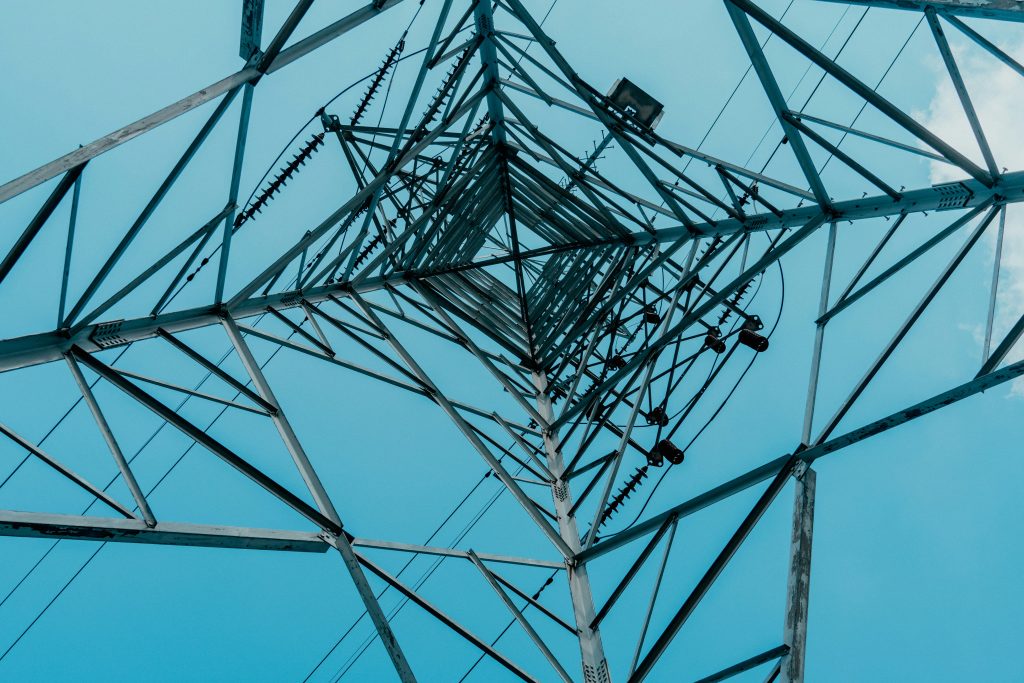
A static line rating is a bet on the worst day of the year. Hot air, no wind, full sun, and a conductor already close to its thermal limit. Utilities set the number there and leave it, because a rating that’s wrong on the wrong day sags a line into a tree.
Most days are not that day. On a cold night with a crosswind, the same conductor can carry considerably more current than its static rating permits, and the extra capacity just sits there.
Ambient-adjusted ratings and dynamic line ratings are two ways of getting at that headroom. They get mentioned in the same breath constantly, but they work at very different depths, and only one of them is optional.
AAR: the one you don’t get to skip
FERC Order No. 881 requires transmission providers to move off purely static ratings. In practice that means:
- Hourly ratings built on forecast ambient air temperature, including the solar heating that varies with time of day
- At least four seasonal ratings for longer-term transmission service requests
- Separate emergency ratings instead of one number covering everything
- Electronic ratings updates at least hourly
The compliance timeline is not a single national date. Implementation is staggered, it varies by ISO and RTO, and some regions have moved theirs. ISO New England asked FERC for a deferral in April 2025 and got it at the end of May. If you’re planning around a date you heard two years ago, check it against your own operator’s current schedule before you build to it.
What AAR does not account for is wind. Wind is where most of the headroom lives.
DLR: measuring the line instead of the forecast
Dynamic line ratings work from conditions at the conductor rather than a temperature forecast for the region. A DLR system takes in ambient temperature, wind speed and direction, solar radiation, and in most implementations the line’s actual sag and tension. Ratings update sub-hourly.
Wind is the reason the gap between the two methods is as wide as it is. A few miles per hour of crosswind pulls heat off a conductor far faster than still air does, and neither a static rating nor an hourly temperature forecast can see that happening.
What the difference is actually worth
FERC put numbers on this in its July 2024 advance notice of proposed rulemaking on DLR implementation. These are gains measured against AAR, not against static ratings:
| Utility | Region | Capacity gain over AAR |
|---|---|---|
| Duquesne Light | PJM | 25% average line rating increase |
| PPL | PJM | About 17% on normal ratings, 8.5% to 16.5% on emergency |
| National Grid | Massachusetts | About 16% |
| Oncor | ERCOT | 6% to 14% on average |
Those are large spreads on infrastructure that already exists. A 17% capacity gain on an existing corridor costs a fraction of a new corridor and requires no siting.
The variation across those four is worth reading carefully too. Oncor’s 6% and Duquesne’s 25% are the same technology producing very different results, which mostly comes down to terrain, prevailing wind, and how conservative the original static assumptions were. Your number depends on your lines.
Where DLR earns its keep
Renewable export. Wind farms generate most when it’s windy, which is exactly when the lines carrying that output are being cooled hardest. Static and ambient-adjusted ratings both miss the correlation. DLR catches it, so the extra capacity shows up at the moment the generation actually needs it.
Uneven conditions along a span. A rating applied to a whole line is governed by its worst section. Shading, elevation change, and local wind patterns mean conditions can differ meaningfully from one end to the other. Measuring at multiple points tells you where the real constraint sits instead of assuming it’s everywhere.
Derating for risk. The same instrumentation that finds extra capacity on a good day flags a bad one. High conductor temperature combined with low wind during fire season is a condition worth reacting to, and a system already watching sag and tension picks up ice loading in winter for the same reason.
The part the regulatory summaries skip
Every explainer on DLR glosses over the same practical fact. Somebody has to get sensors onto an energized conductor, frequently in terrain that made the line hard to build in the first place. Ratings are only ever as good as what’s measuring the line.
That’s the gap Sentrisense fills. It’s a power line monitoring network that mounts on the conductor and reports line conditions continuously, which is the raw input any DLR program runs on. Without instrumentation at the line, you are still forecasting.
Where this is heading
AAR is the floor, and it’s compulsory. DLR is voluntary today, but FERC opened a rulemaking on it in 2024, and the utilities already running it are reporting double-digit capacity gains on lines they have owned for decades.
If you’re standing up AAR to satisfy Order 881, it’s worth pricing the instrumentation to go further while the crews are already planning line work. Most of the capacity you’re looking for is sitting in the wind data that AAR was never designed to collect.