
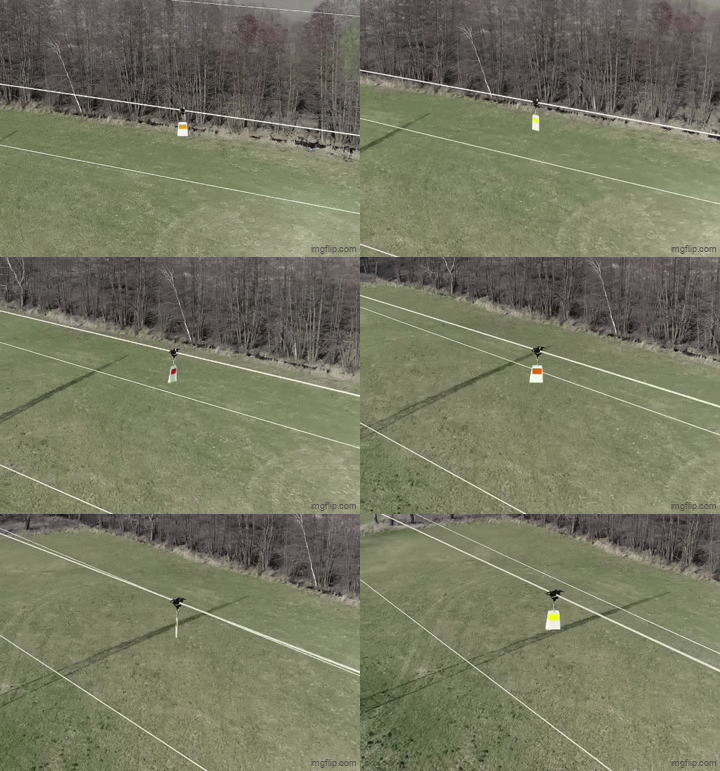
Fatal bird strikes on power lines are a persistent and preventable problem, especially for migratory species unfamiliar with the terrain. These strikes and deaths have real consequences for wildlife and utility operations, leading to preventable deaths, customer outages, damaged equipment, and regulatory risk.
That’s why bird diverters are necessary for safe utility operations, and the research proves it. Studies from Hawaii, the US, and Europe consistently find that bird flight diverters reduce bird mortality. Some studies found a 73 percent or greater reduction in bird mortality, with some monitored spans showing no recorded collisions following installation.
The remaining challenge is not whether diverters work, but how to install them safely, quickly, and cost-effectively. Here is where drone technology is solving that problem for utilities across the U.S. and internationally.
First, Understanding the Limits of Traditional Installation
Historically, bucket trucks, lineworkers climbing poles, and helicopters have been to go-to method for bird diverter installation. Each method has significant drawbacks.
Bucket trucks require road access, which is often impossible in wetlands, canyons, or protected habitats without building temporary access roads. Helicopters avoid that requirement but are expensive, weather-dependent, and carry high operational and safety risk. Traditional installation also puts lineworkers at height and close to live lines, increasing the risk of injury.
The Efficiency of Drone Installs
Drone-deployed diverter installation removes workers from the danger zone entirely and dramatically improves productivity. Modern utility drone platforms can be fitted with specialized diverter mount systems, allowing crews to carry, position, and secure devices directly on energized or de-energized lines without physical contact.
For utilities exploring this approach, the shift is substantial. According to industry reports, drone operations can install 300-400 diverters per day, many times faster than traditional methods.
Drones can also survey power lines and also support maintenance, which utilities are rapidly adopting as part of comprehensive reliability programs.
What Utilities Gain from Drone Installation
Safety First. Removing crews from heights and proximity to live wire reduces risk. In a project combining UAVs with robotic installation tools, a utility reported zero worker-at-height incidents over the course of installation.
Speed and Efficiency. Drones can access spans in rugged terrain, including forests or wetland buffers where bucket trucks cannot go. Many utilities have used this approach to complete installation work much faster and with fewer mobilizations.
Cost Savings. Projects that shift from helicopters and bucket crews to drone teams regularly report 20-30 percent total cost reductions due to lower labor, equipment, and logistical expenses.
Remote Access and Scalability. Drones can reach miles of line without disturbing ground access, which is especially valuable in environmentally sensitive or inaccessible areas.
Drone installation also complements other utility safety and compliance efforts, such as power line markers that alert pilots, helicopter crews, and other aerial operators to obstacles.
Case Study: Research-Backed Drone Installation Outcomes
Peer-reviewed research published in Human-Wildlife Interactions examined the use of unmanned aircraft systems to install bird collision markers on overhead power lines as an alternative to bucket trucks and helicopter-based installation. The study evaluated safety, efficiency, and cost impacts of drone-assisted installation in real utility environments.
According to the authors, drone-based installation significantly reduced worker exposure to live conductors and working-at-height risks, while also improving installation efficiency compared to traditional bucket truck methods. The researchers reported that drone workflows reduced overall installation time per marker and projected annual cost savings exceeding $16,000 when replacing conventional installation approaches, primarily due to reduced labor hours and equipment requirements.
The study also noted that drone deployment allowed installation in areas with limited or no road access. These findings support broader industry observations that drone installed bird diverters can scale efficiently across long spans and challenging terrain while maintaining consistent installation quality and keeping costs low.
Measurable Wildlife Protection
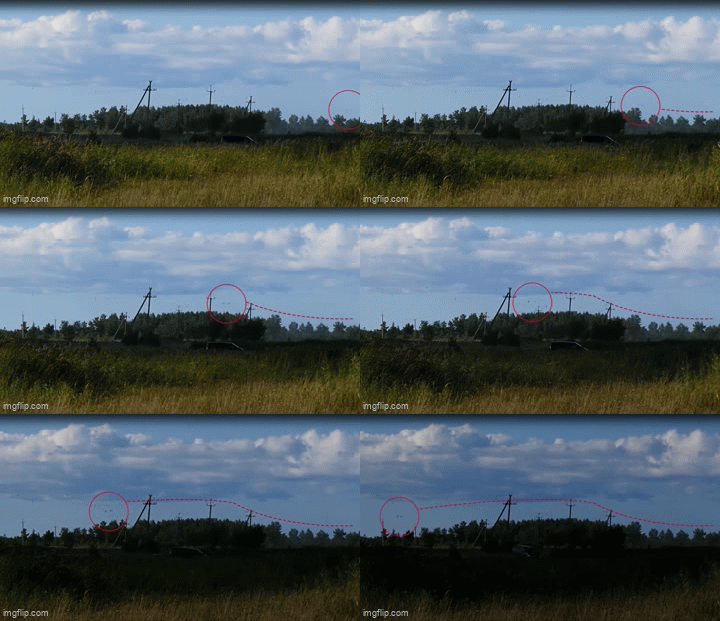
The ecological impact of correctly installed bird diverters is well documented. Utilities in Hawaii, for example, have installed tens of thousands of bird diverters to protect endangered seabirds such as Newell’s shearwater. These devices are designed for high visibility (up to 1,500 feet away) and remain easily detectable in low light and foggy conditions, including nocturnal birds.
Broader Integration with Utility Safety Programs
Drones for aerial workflows don’t just serve bird diverter installation. Utilities are exploring them for a wide range of applications, from vegetation encroachment surveys to asset inspection and maintenance planning. As these drone programs mature, they become part of an integrated utility reliability strategy that increases safety and reduces risk across operations.
Drone deployment also aligns with other utility safety products such as low line warning systems and signage, which enhance visual awareness for field teams and aerial operators alike.
The Bottom Line
Drone-deployed bird diverter installation is no longer experimental. It is a proven operational approach that delivers measurable safety, cost, and ecological benefits. For utilities balancing reliability goals, worker safety, and environmental standards, drones offer a smarter way forward..
By adopting these technologies alongside products like power line markers and targeted warning systems, utilities are building more resilient networks that serve both people and wildlife better than ever.