
Agricultural Bird Control: How to Protect Feed, Crops, Barns, and Equipment
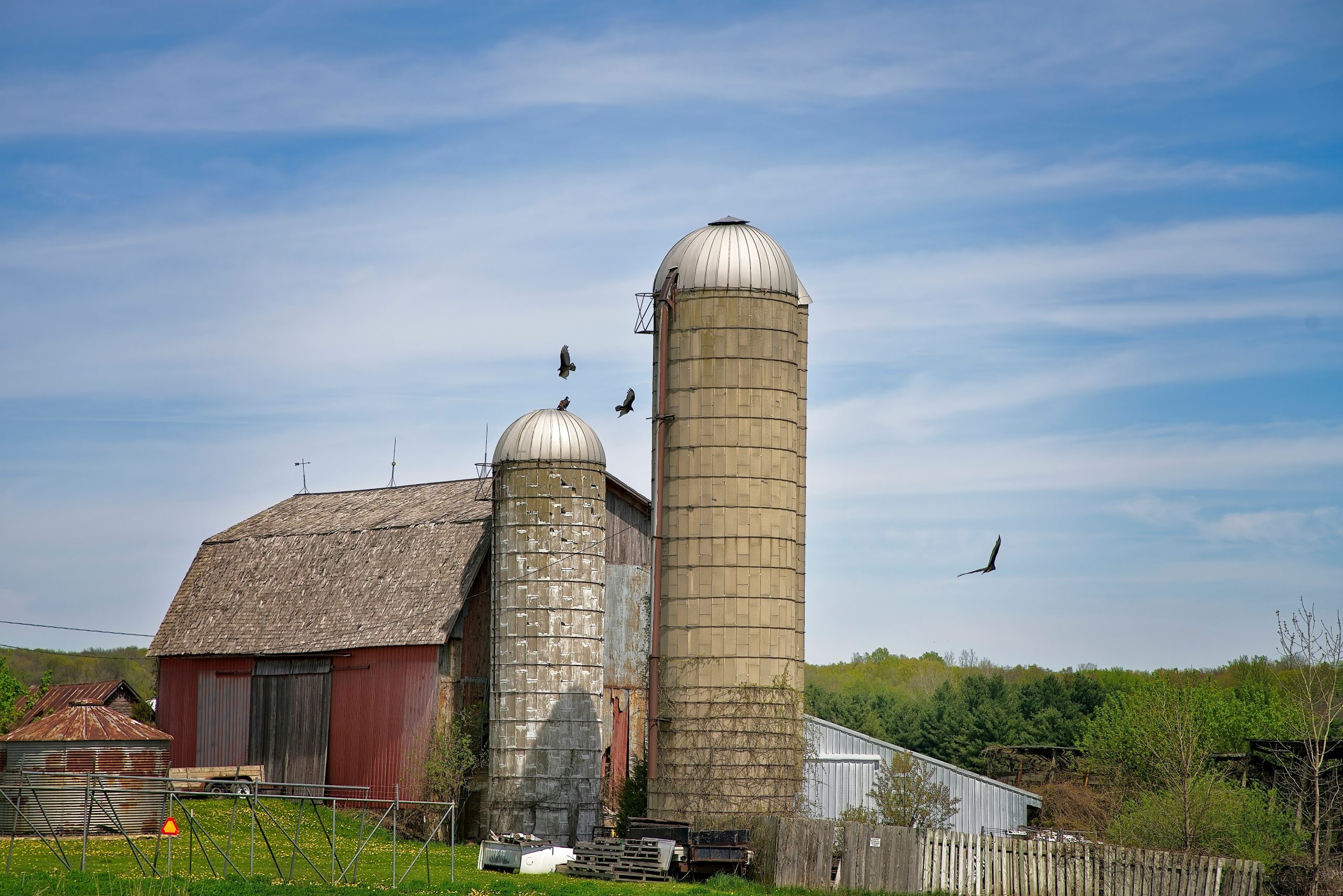
A farm bird problem usually shows up as something small: droppings under a rafter, starlings around a feed lane, or pigeons on a grain bin.
The common mistake is treating all of those as the same problem.
Good farm bird control starts by identifying the loss birds are causing. Are they eating feed? Contaminating feed bunks or water troughs? Damaging fruit close to harvest?
Birds may also be roosting over equipment, nesting inside vents, or taking fish from hatchery ponds. That answer determines the control plan.
USDA APHIS bird damage research shows why bird activity can become a feed, crop, or maintenance issue rather than a simple nuisance.
Start with the bird damage you need to control
Bird control decisions should start with the part of the operation taking the hit.
A flock eating dairy ration, birds pecking fruit, or sparrows entering a feed room all point to different control priorities.
Hatchery ponds are different again. When fish-eating birds are removing stock, the control plan has to account for water access and wildlife rules.
| Area affected | What to look for |
|---|---|
| Feed, grain, and storage | Feed loss, droppings in feed, and damaged bags. |
| Crops and fields | Seed loss, fruit pecking, and edge damage before harvest. |
| Dairy and livestock | Feed bunk problems, contaminated water troughs, and young-stock exposure. |
| Poultry | Wild-bird contact, feed contamination, and disease exposure. |
| Buildings and equipment | Roosting, nesting, and droppings on machinery. |
| Worker areas | Slip hazards, ladder work, and aggressive nesting birds. |
| Adjacent operations | Aquaculture losses, utility conflicts, and grain-elevator cleanup. |
That first pass keeps the plan practical. Birds on a fence far from production usually do not carry the same priority as birds over a calf area, packing line, or feed bunk.
Common bird problems around farms
The damage changes by setting. A flock in a feed alley creates a different problem than birds in fruit, barns, or hatchery ponds.
| Problem | What the research says |
|---|---|
| Crop loss before harvest | Birds damage crops during short, high-risk windows. Newly planted seed, ripening grain, and fruit are common examples. A review of bird repellents treats seed treatments, leaf-applied products, and fruit repellents as different jobs because protecting seed at planting is not the same as protecting fruit near harvest. |
| Fruit damage and lower marketability | Birds do not only remove fruit. USDA APHIS bird damage research notes that bird damage can reduce fruit quality. Damaged fruit can also become more vulnerable to pests and pathogens. |
| Feed spoilage and contamination | Birds in livestock areas can eat feed, spoil feed, and raise operating costs. A Journal of Dairy Science survey estimated Pennsylvania dairy feed-loss impacts at $4.11 million to $12.08 million. |
| Disease risk around livestock and poultry | Birds around feed, water, or livestock can become a disease-control problem. A Washington dairy survey found that farms with large numbers of wild birds were more likely to report Salmonella and Johne’s disease. |
| Poultry disease exposure | Wild birds are a separate disease concern for poultry operations. USDA APHIS avian influenza guidance describes avian influenza as a contagious disease of domestic and wild birds. APHIS also recommends covered enclosures and netting to help reduce contact with wild birds. |
| Infrastructure corrosion | USDA APHIS bird damage research notes that acidic bird fecal matter can accelerate corrosion on fencing, corrals, and other infrastructure. On farms, that can turn bird activity into a maintenance issue. |
| Nesting and roosting inside farm buildings | Birds nesting or roosting inside barns can leave droppings over feed, equipment, and walkways. They can also plug drains or damage insulation. Penn State Extension’s farm building guidance recommends reducing access to roosting and nesting sites when exclusion is not practical. |
| Fish loss at hatcheries and aquaculture facilities | Hatcheries and aquaculture facilities can attract fish-eating birds because ponds concentrate fish in predictable places. Aquaculture research identifies double-crested cormorants, herons, and egrets as common fish-eating birds in catfish operations. American white pelicans also appear in the research. |
Where to inspect for bird activity first
Birds do not choose farm structures randomly. They move toward places that make life easier. That usually means easier food, safer shelter, better visibility, or a fast way out.
A good inspection starts by looking at the farm the way a bird would. Where can it land? Where can it hide? Where can it feed? Where can it wait until people leave?
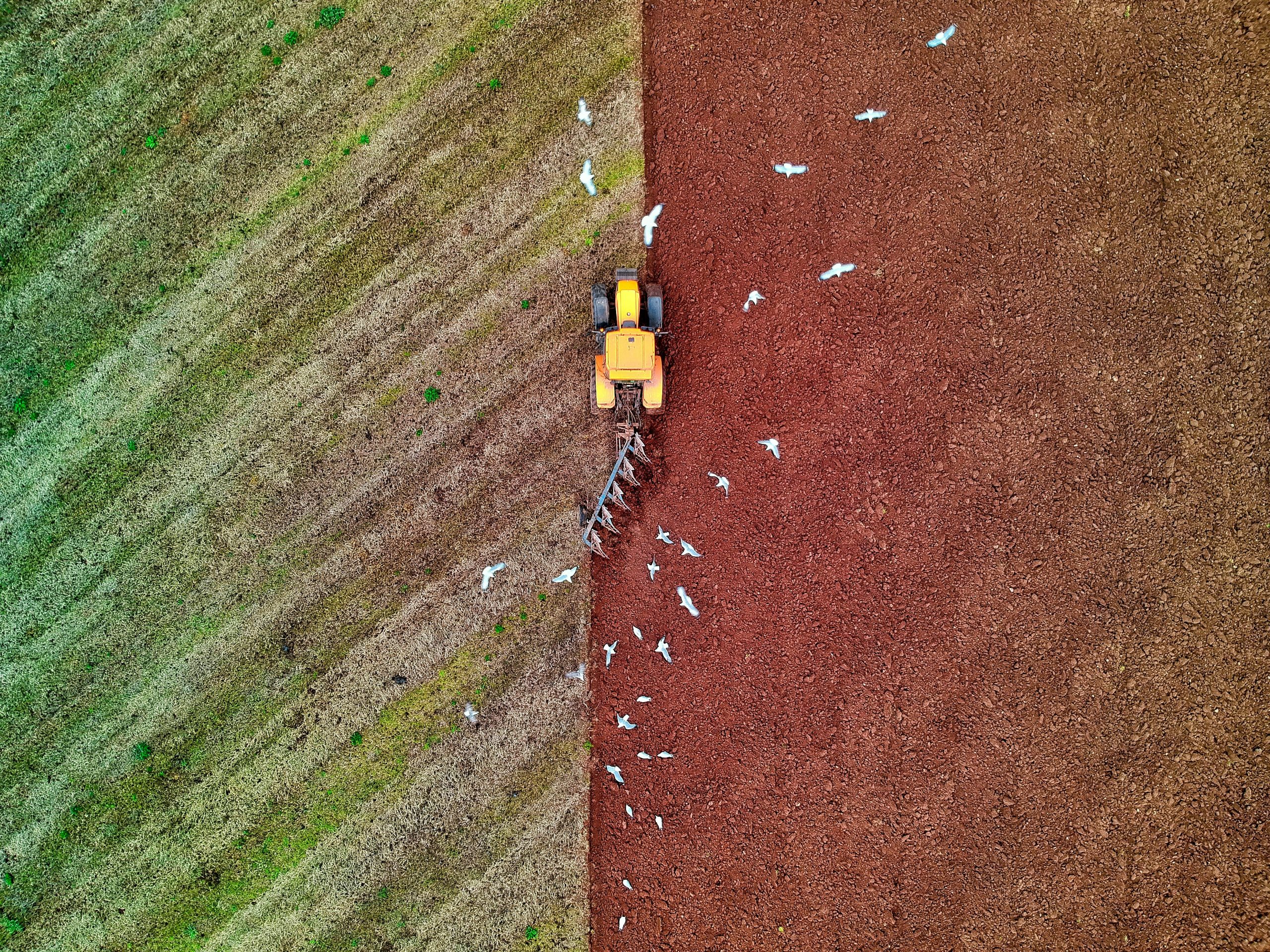
Fields during tractor workTractor work can turn a field into an easy feeding area. When soil is opened or crop residue is disturbed, birds may find seed, insects, waste grain, and plant material that were harder to reach before.
The birds may not stay in the field for long. After feeding, they often lift back to field edges or nearby cover. Watch for the pattern between the worked ground and the places birds use to wait.
Feed lanes, bunks, and commodity shedsFeed areas attract birds because the food is predictable. Birds may avoid the feed while people are active. Instead, they wait above or nearby until the area quiets down.
Look for the places birds use to watch the feed area before they drop in. They may sit on beams, gates, rafters, or rooflines. From there, they can feed quickly and leave when disturbed.
Grain bins, silos, and conveyorsGrain bins and silos give birds more than height. They give birds a way to watch the area before they land. They also keep birds close to grain without forcing them to stay exposed on the ground.
Once birds find these structures, they may use the raised surfaces as lookout spots. Check ladders, catwalks, roof edges, and conveyor frames. Droppings below one repeated spot usually show where birds are spending time.
Barns and livestock buildingsBarns give birds cover from weather, predators, and farm activity. Birds may enter through open doors, vents, gaps, or damaged siding. Once inside, they look for raised surfaces where they can wait or rest.
Start above the areas birds would want to watch. This often means feed, bedding, water troughs, and work areas. Then check the ground below for droppings, feathers, stains, or nesting material.
Poultry houses and range areasWild birds are drawn to poultry areas because feed and water are often nearby. They may also look for small openings that let them get close to the flock without much risk.
First look at how a bird could get in. Then look at where it could perch once it is nearby. Doors, vents, feed storage areas, standing water, and roof edges are usually the important spots.
Orchards, vineyards, and field edgesBirds often wait near a crop before they move in to feed. They look for nearby places that give them cover and a clear view. That lets them watch the crop before entering it.
Check the areas around the crop first. Birds may use trees, poles, rooflines, fence lines, or other raised edges as waiting spots. From there, they can feed and retreat back to cover.
Equipment sheds and farm shopsBirds may enter sheds and shops because these spaces are dry and quiet. Open doors and small gaps give them a way in. Once inside, they look for raised places where they can stay out of the way.
Rafters, beams, and ledges are common resting spots. Stored materials can also create protected pockets where birds may hide or nest. When those areas sit above equipment or work surfaces, the problem becomes more than a mess.
Hatchery ponds and open-water systemsOpen water attracts birds because it gives them food, drinking water, and room to land. Fish-eating birds may also use the pond as a feeding site.
In these areas, birds often look for a place to watch the water before moving in. Trees, poles, rooflines, and pond edges can serve that purpose. Focus first on the places birds use to wait near the water.
Bird control by species and behavior
Different birds use different parts of a farm because they are solving different problems. Some are looking for feed. Some are looking for shelter. Others need water, height, nesting space, or a safe place to wait.
That is why bird control works better when it starts with behavior. The species matters, but the real question is what the bird is getting from that part of the farm.
Starlings usually point back to feed access
Starlings around dairies and feedlots are usually there because feed is easy to reach. Exposed feed gives them a reliable reason to return. Spilled grain, silage faces, commodity bays, and damaged storage can all keep that pattern going.
A good place to start would be any feed bunk, commodity bay, or silage face where birds can feed with little effort. From there, the next clue is where they go between feeding trips. Starlings often wait above or nearby before dropping back down.
That may lead the inspection toward overhead beams, rooflines, nearby trees, or other resting spots close to feed. The fix usually has to address both parts of the pattern. Reducing exposed feed matters, but so does limiting the places birds use while they wait.
A device alone will not fix a feed-lane problem if the food source stays open.
Pigeons keep coming back to ledges and openings
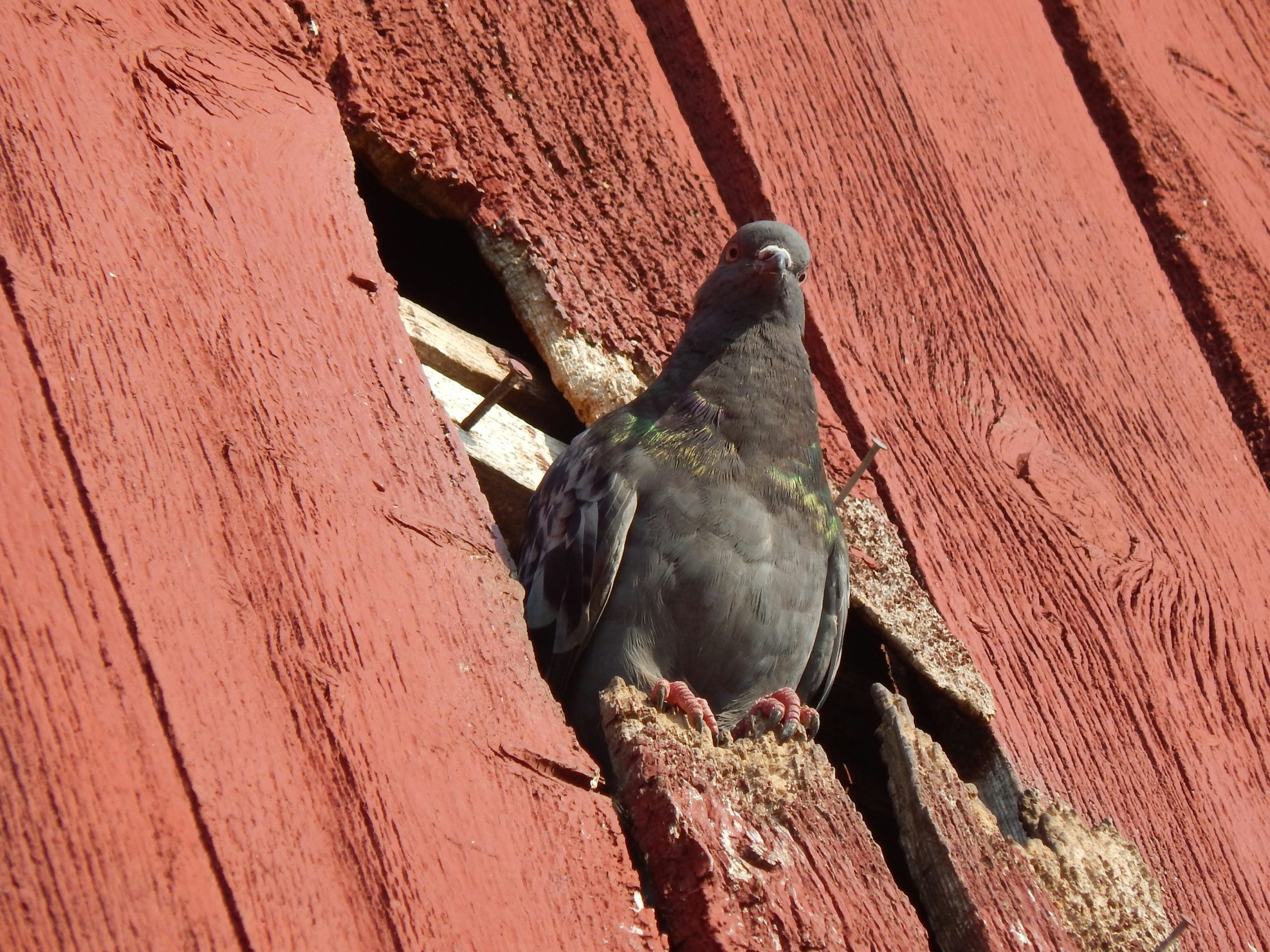
Pigeons become a problem when a building gives them a dry place to stay near food. They are not just passing through. They return because the structure gives them somewhere to land, rest, nest, or wait.
A ledge gives pigeons a landing surface. A rafter gives them cover. An opening lets them move inside. Once pigeons learn that a building works for them, they may return to the same surfaces every day.
The important clue is the surface they are actually using. Bird spikes, bird wire, or ledge systems only help when they are placed on the real landing area. They will not solve an open door, a wall gap, or a nearby food source.
A University of Missouri Extension pigeon control guide describes pigeons as common around farmyards, grain elevators, and feed mills. The guide also notes that openings and flat surfaces allow pigeons to roost or build nests.
Sparrows often start with a gap you barely notice
Sparrows can use spaces that larger birds ignore. Their advantage is size. A small gap can be enough for them to enter a building and settle into protected areas inside.
A loose piece of siding may not look like much from the ground. A damaged screen, vent opening, roof gap, or utility penetration can still give sparrows a way in. Once inside, they may nest or roost where exterior deterrents cannot reach them.
The useful question is how they are getting inside. After that, the next question is where they are spending time once they enter.
Penn State Extension lists house sparrows, pigeons, and European starlings among the birds that commonly cause problems around barns. Its farm building bird control guidance also explains that the right control method changes with the bird.
Once sparrows are inside, exterior deterrents are usually not enough. The opening has to be addressed before the interior problem can be controlled.
Blackbird flocks are harder to stop once feeding patterns form
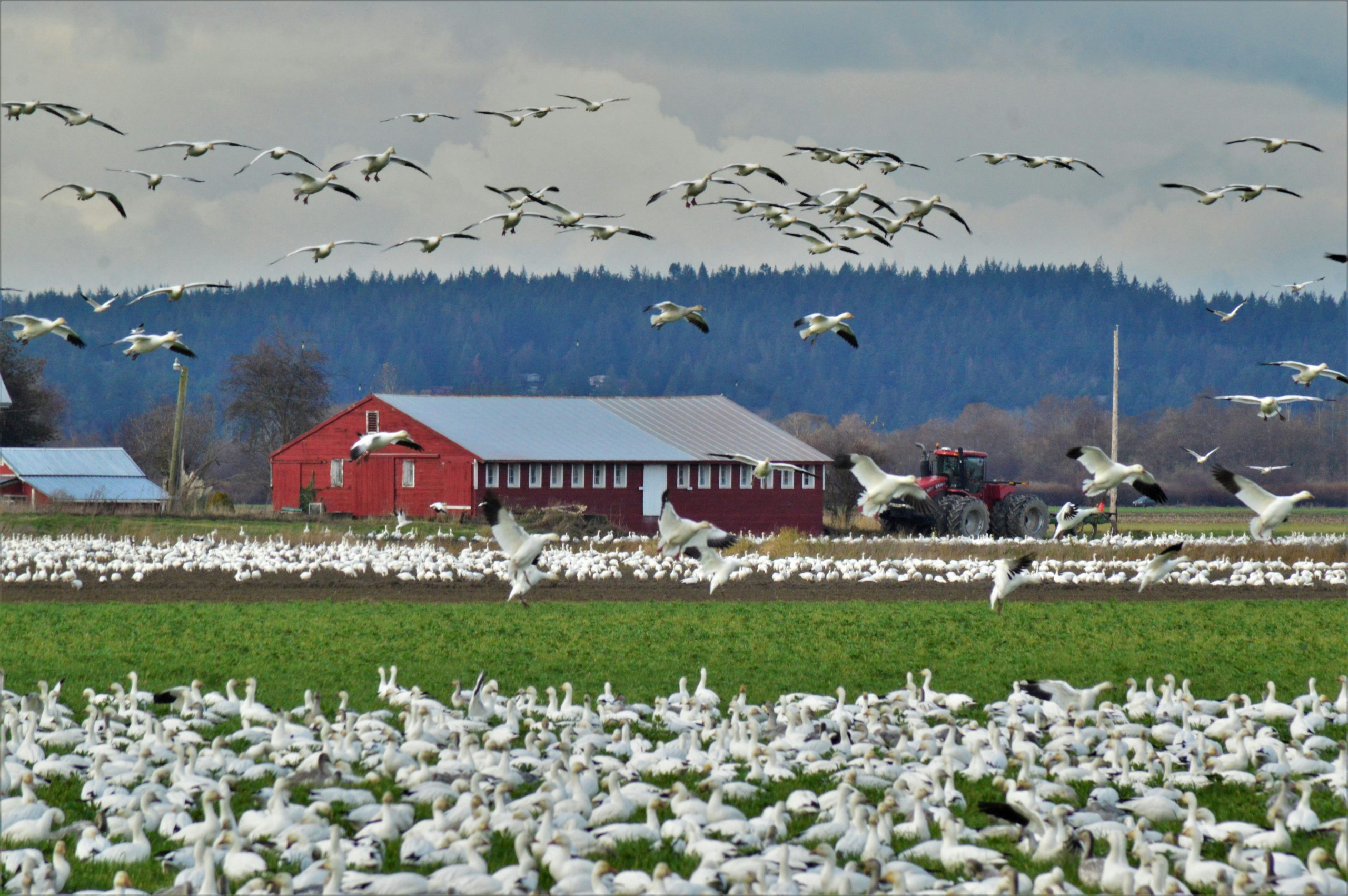
Blackbirds and grackles become harder to manage once they find a reliable feeding pattern. At that point, the flock is no longer just moving through the property. It has learned where to gather, where to feed, and where to retreat.
In crop areas, blackbirds may wait along tree lines or utility structures before moving into the field. Around feed areas, they may gather near exposed feed or water before dropping in.
USDA APHIS notes that large flocks of blackbirds gather in the northern Great Plains before migration. From August to October, they feed on crops, especially sunflower.
APHIS also says red-winged blackbirds, common grackles, and yellow-headed blackbirds cause much of that sunflower damage. APHIS bird damage research identifies frightening devices, cultural practices, and crop spacing as research areas for reducing bird damage.
This is why timing matters. In crop areas, early monitoring can prevent a feeding pattern from becoming established. Once the flock has settled in, one product is less likely to solve the problem by itself.
Woodpecker deterrents should match the reason for damage
Woodpecker damage is not all the same. A bird may be drumming to attract a mate. It may be defending territory. It may be searching for insects. It may also be testing a surface for nesting.
The pattern of damage matters because the motive changes the control approach. A few drum marks do not mean the same thing as repeated drilling or deeper nesting holes.
Colorado State University Extension explains that woodpeckers drill holes in wood, synthetic stucco siding, eaves, bee hives, and utility poles. It also explains that woodpeckers may hammer to attract mates, defend territory, or search for insects.
A useful inspection follows the damage pattern. Siding, trim, posts, poles, and repeated strike points can show where the bird is returning. Insect activity or rot may also explain why the bird keeps working the same area.
A woodpecker hazing device may make sense when the bird keeps returning to the same siding, pole, or post. The deterrent should match the reason the bird is there.
Prevent barn swallow nests before they are active
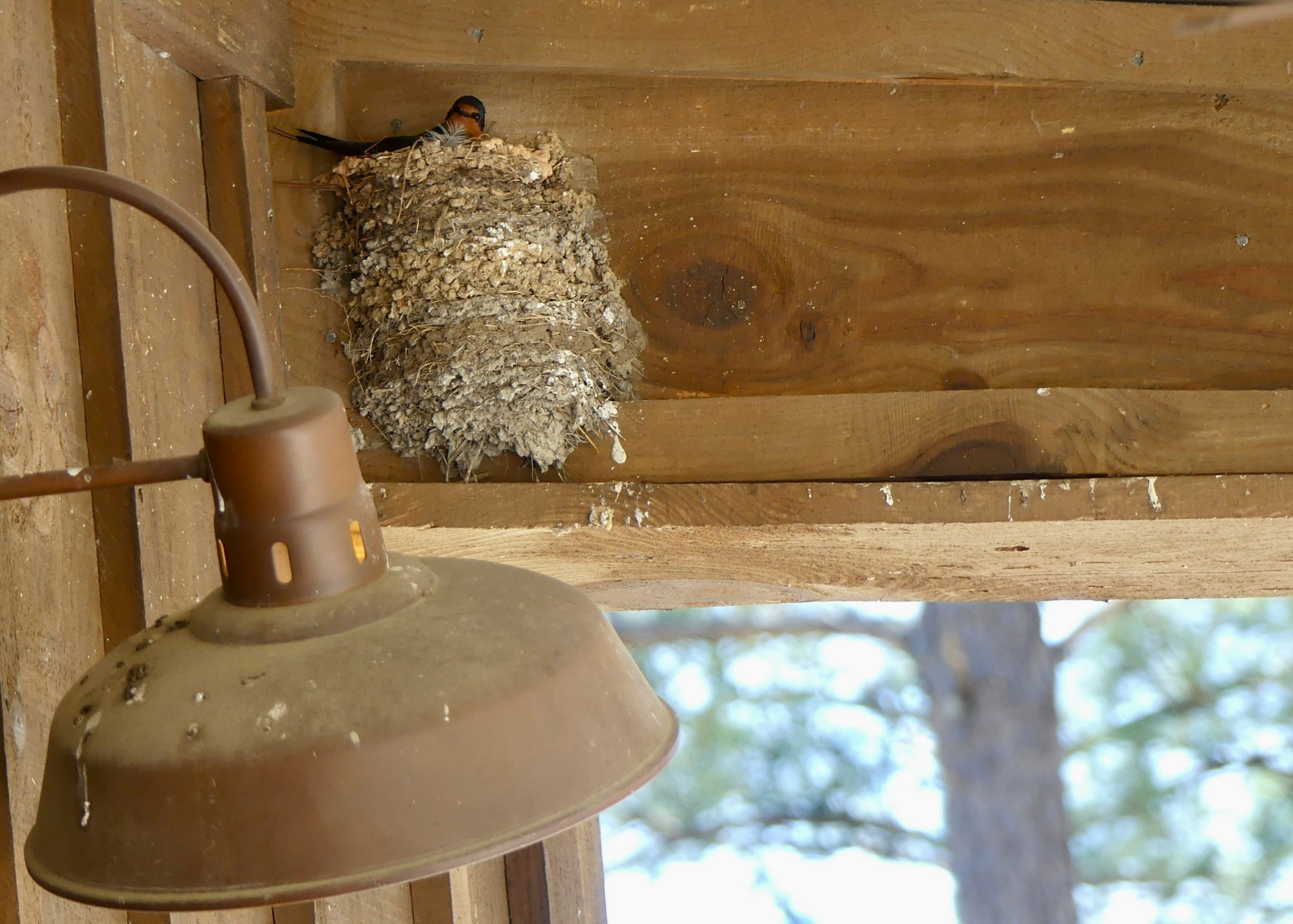
Barn swallows become a problem when they find a protected surface for mud nesting. An eave, doorway header, rafter, beam, or light fixture can give them the support they need.
The easiest control window is before the nest is active. Old nest marks and mud stains often show where birds have built before. Those same areas may draw them back the next season.
Once a nest contains eggs, chicks, or dependent young, removal may be restricted under federal, state, or local rules. That makes early prevention more important than late removal.
Physical exclusion works best before the birds are already committed to the site.
Goose problems usually trace back to water and open ground
Geese use areas that feel open and safe. They favor water, short vegetation, and clear sightlines. Those features let them feed while still watching for threats.
A pond gives geese water and an escape route. Open ground gives them room to graze and move as a group. Irrigation areas can also draw them in when food and water are close together.
A goose problem usually points back to the habitat. The site is giving them what they need, so control often requires changing the conditions that make the area attractive.
That may mean habitat changes, exclusion from sensitive areas, and steady non-lethal pressure. The goal is to keep the site from becoming part of their daily routine.
USDA APHIS says geese and other waterfowl can damage crops through direct consumption, trampling, and fouling. Its waterfowl conflict guidance also notes that some waterfowl cause problems at aquaculture facilities by feeding on fish fry and fingerlings.
Keep raptors off unsafe structures without harming them
Raptors and ospreys use height to hunt, watch, and rest. Poles, crossarms, and towers can attract them because those structures give a wide view of the area.
Near substations or power equipment, that behavior creates a different kind of problem. The issue is not just nuisance or cleanup. It can become an equipment risk and a wildlife safety issue.
The goal is to discourage birds from using risky structures without harming protected wildlife.
U.S. Fish and Wildlife Service guidance on power line bird impacts explains that birds can be electrocuted when flying on or off distribution poles. Roosting birds can also cause lines to sway. Nesting material can create an electrical connection or catch fire.
For crossarms and elevated supports, products such as FireFly XA crossarm bird hazing or RaptorWire bird hazing may fit when birds keep using the same structure.
Fish-eating birds create a different kind of loss
At hatcheries, ponds, and aquaculture facilities, the loss can be direct. Fish-eating birds may not need to damage a structure or contaminate feed. Repeated feeding can be enough to create real stock loss.
These birds are usually looking for water they can approach safely. They may also use nearby roosts, levees, trees, or regular flight paths before feeding.
USDA APHIS identifies cormorants, pelicans, and wading birds as groups involved in aquaculture damage research. Its aquaculture bird damage research focuses on the economic impact of damage to aquaculture systems.
For pond and hatchery operations, the useful pattern is how birds approach the water. The waiting spots matter too. Control should match the full pattern, not just the moment when birds are already feeding.
Check nest status before moving or removing nests
Nest timing changes the available options.
The U.S. Fish and Wildlife Service explains in its bird nest guidance that most migratory birds are protected under the Migratory Bird Treaty Act. Nests with eggs, chicks, or dependent young cannot be destroyed unless the activity is authorized.
Before disturbing a nest, identify the species when possible. Then check whether the nest is active and review the rules that apply in your area.
Legal caution: This article is not legal advice. Always confirm federal, state, and local requirements before disturbing nests or protected birds.
Match the bird control method to the problem area
Use this sequence during inspection:
- Identify the loss. Note feed loss, crop damage, or equipment fouling. Also flag bird entry, disease exposure, or blocked vents.
- Find the repeat behavior. Look for feeding, perching, or roosting. Also note nesting, entry, or travel routes.
- Mark the control point. Find the surface, opening, or crop edge that makes the behavior easy.
- Prioritize by risk. Birds over feed, poultry, or work zones usually need attention first.
- Choose the method last. Exclusion, perch control, or hazing should follow the inspection.
| Bird behavior | Problem area | Best first control | Possible solution | Not ideal when… |
|---|---|---|---|---|
| Perching and roosting | Roof edges, beams, and rafters. | Landing control. | Bird spikes, bird wire, or ledge systems. | Birds are feeding in fields or entering through gaps. |
| Building entry | Vents, loose siding, and roof gaps. | Exclusion. | Mesh, netting, or sealed panels. | Birds are feeding outside or roosting on untreated ledges. |
| Feed problems | Feed lanes, commodity sheds, and silage areas. | Feed access control plus deterrents on nearby resting surfaces. | Reduced exposed feed, repaired leaks, and perch deterrents. | Exposed feed remains available. |
| Crop damage | Orchards, vineyards, and grain fields. | Early timing and field monitoring. | Visual deterrents, netting, or rotating hazing. | Birds have already established a feeding pattern. |
| Woodpecker activity | Siding, poles, and trim. | Surface-specific deterrence. | A woodpecker deterrent matched to the damaged surface. | The damage source is insects, rot, or an active nesting cavity. |
| Exterior building use | Barns, sheds, and rooflines. | Structure-mounted hazing. | FireFly WM bird hazing or BirdAway bird hazing. | Birds are entering through openings or nesting inside. |
| Crossarm or support use | Crossarms, poles, and towers. | Non-harmful perch deterrents. | FireFly XA or RaptorWire. | The main issue is feed access or indoor entry. |
| Overhead line visibility | Wires, spans, and utility corridors. | Visibility support. | FireFly FF, BirdMark, or SpanGuard. | You need perch control or building exclusion. |
For overhead line visibility, bird diverters belong in the line-visibility portion of the plan. They are not a substitute for feed protection, building exclusion, or perch control.
If birds are using rooflines, crossarms, or ledges as landing points, the product choice should match that surface. Handle feed access, building entry, and repeat perching separately. Line visibility is its own problem.
Prioritize feed, grain, and livestock feed areas
Feed and grain problems are usually high priority because birds can create direct loss and contamination risk in the same area.
Look at transfer points, commodity sheds, and damaged bags. Check feed rooms, calf areas, and water troughs too. Repair leaks, secure damaged packaging, and reduce exposed material where practical.
In feed manufacturing, storage, or handling areas, bird activity can also create regulatory problems. Federal animal food sanitation rules require pest-control steps that protect animal food from contamination. The rule defines pests broadly and includes birds.
Use bird hazing where exclusion is not practical
Hazing can help in open yards, rooflines, and utility supports. It can also help around ponds and other exposed areas where full exclusion is difficult.
A Crop Protection review of biologically meaningful frightening devices found that effectiveness depends on bird species, crop type, and timing. USDA/NWRC authors have also described frightening devices as tools that often provide temporary relief rather than permanent control by themselves.
That does not make hazing useless. It means hazing should be part of a plan, not the whole plan. Rotate deterrents when needed, use them before birds settle into a pattern, and combine hazing with feed protection.
Farm bird control by season
Bird activity changes through the year. So should the inspection routine.
| Season | Main bird problem | Priority action |
|---|---|---|
| Spring | Nesting and building entry. | Seal gaps, block nest sites, and inspect old nest locations before nesting becomes active. |
| Summer | Feed, water, and crop problems. | Protect feed areas, monitor fields, and check poultry disease-prevention gaps. |
| Fall | Harvest and migration activity. | Increase field monitoring before feeding patterns form around ripe crops. |
| Winter | Roosting, feedlot, and structure problems. | Focus on barns, feed lanes, and grain storage. |
Seasonal timing is especially important in crop and nest problems. Once birds are feeding heavily in fruit or using an active nest site, options may narrow.
Choose bird deterrents by location, not guesswork
The best product choice is usually obvious after the problem area is clear. Openings need exclusion. Repeat landing surfaces need perch control. Exposed structures may need hazing.
The wrong product can look active without solving the loss. A deterrent should have a clear job, a clear location, and a way to judge whether bird activity changed after installation.
For farms and facilities dealing with bird activity on buildings, crossarms, or overhead lines, P&R Tech offers bird hazing, deterrent, and diverter products built for those surfaces. It also supports wood-surface problems where woodpeckers keep returning.